
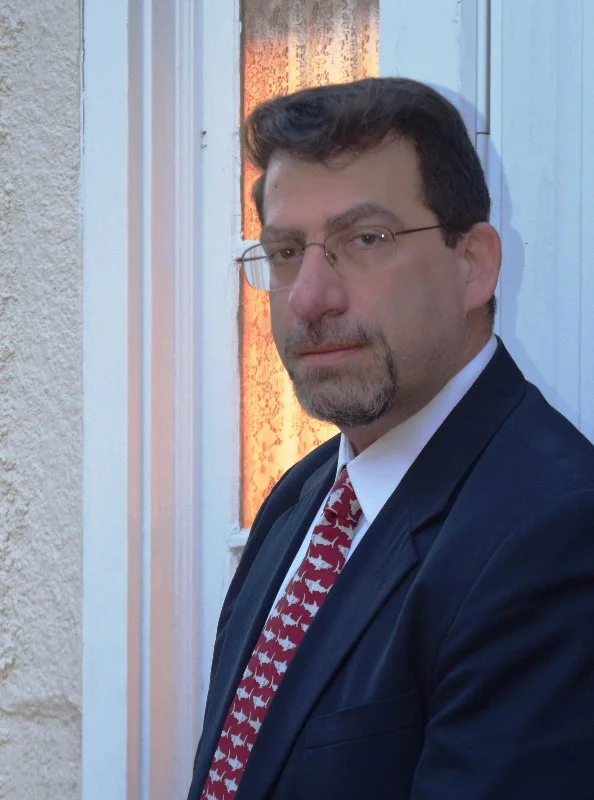
Lawrence Kahn
Director | Utility Vegetation Management Institute, Tulane University Law School
Attorney, entrepreneur and educator, Lawrence ("Larry") Kahn has provided advisory services in the environmental and maritime “trees and seas” space for over 25 years. He previously worked for the U.S. Army, where he was certified as a Contracting Officer’s Representative and negotiated and enforced government contracts and developed and had oversight of the hazard tree removal program, management of Army timber, flora and fauna resources, protection of Army air, water and land resources, and development of environmental remediation projects for the (then) Division of Land Management. He earned his B.A. from Columbia University in 1992 and his J.D. from Tulane University Law School in 1995, then practiced as a federal litigator in New York City for approximately 20 years handling maritime, environmental and energy matters.
In 2013, he changed focus to entrepreneurial pursuits (he remains a licensed attorney), focusing on dangerous industries in an effort to make them safe for workers. Through these efforts, he helped create health, safety and environmentally conscious tree companies on both the East and West Coasts of the United States. At these companies, he developed strategic alliances, built safety programs around safety manuals he developed, and taught worker safety.
The creation of companies in the green industry in California involved in utility line clearance and defensible space work led to his work co-founding the Utility Vegetation Management Institute at Tulane University Law School in 2020, with the mission to serve as the world’s preeminent center for the understanding, development, and improvement of law, policy, and practice of utility vegetation management in order to promote the creation of safe and environmentally sound co-existence among people, infrastructure, and the natural environment while also ensuring safe and reliable delivery of energy and other utility services. Larry has been the Director of the UVMI since its inception, and has been active in training attorneys, providing guidance to federal, state and municipal government, Native American Tribes, industry, charitable organizations, public advocates, and individuals throughout North America and across the globe. From its New Orleans headquarters, the UVMI has also served as a center for cutting edge research on technology, law, policy and practice. Articles and scholarly works developed and published by Larry and his students have featured at numerous international, national, and regional conferences, including Environmental Concerns in Rights of Way Management, Trees & Utilities, ISA, IEEE, NATF, RE+, and more.
Larry also serves as the Facilitator of the Vegetation Management Working Group of the International Wildfire Risk Mitigation Consortium and has been called upon to advise numerous US state governments and the US federal government on law, regulation, policy and practice aimed at mitigating utility-related wildfire risk and building resilience on utility corridors.
He is an active member of the Utility Arborist Association, the International Society of Arboriculture, and the American Public Power Association. He also co-founded and serves as a Director of Tribal Energy Solutions, a charitable organization seeking to end the energy crisis on Native American tribal lands.
Larry lives in Mountain Lakes, New Jersey (USA) with his wife and three boys, two of whom are Eagle Scouts (and the third will soon be). He's active in supporting scouting, youth sports and the arts, serves as a member of his town's Woodlands Committee, and attempts to keep up with the seemingly never-ending repair needs of his historic home.
Talk title: Preparing for the Future: Climate Change, Fire Seasons & Utility Vegetation Strategies
As fire seasons lengthen and weather extremes intensify, utilities and arborists must rethink how vegetation is assessed, managed, and monitored around critical infrastructure. This forward-looking session explores how climate-driven shifts in drought stress, species composition, fuel loads, and storm intensity are reshaping wildfire risk globally — and particularly across Australia.
Attendees will examine adaptive vegetation management strategies, emerging risk metrics, and practical planning tools that can help future-proof utility corridors while supporting ecological resilience. Designed for arborists, utility professionals, and land managers, this session connects climate science to actionable field practice — reducing ignition risk today while strengthening post-fire recovery and long-term landscape resilience.