
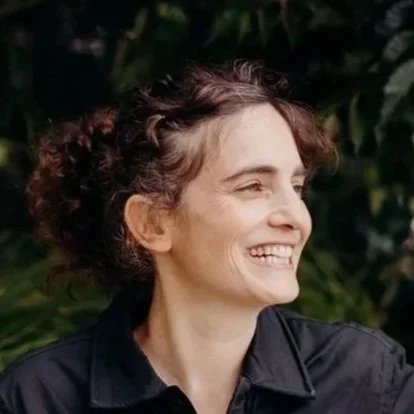
Roxane Bandini-Maeder
CEO and co-founder | Geoneon
Roxane is the CEO and co-founder of Geoneon, a technology firm that leverages Earth Observation, Artificial Intelligence and Data Fusion to map globally wildfire risk and vegetation. With a background in disaster risk reduction, spatial sciences, and international relations, she emphasises the importance of cross-border collaboration, knowledge dissemination, and impactful partnerships. Throughout her career, Roxane has offered advisory services to government agencies, leveraging her geospatial expertise to shape water exploration, bushfire management, and emergency service strategies.
Talk title: Greening Launceston: Cultivating Urban Resilience through Strategic Growth (Joint talk with Emma van Lint)
Urban forests are emerging as critical infrastructure in the face of accelerating climate change, biodiversity loss, and social inequity. This joint presentation showcases an innovative partnership between the City of Launceston and Geoneon, which underpins the development and implementation of Launceston’s first Urban Greening Strategy (2023–2040). The strategy sets an ambitious goal: to more than double canopy cover across the municipality to 40% by 2040.
Geoneon will present the research and technology behind the urban forest mapping process, including the use of high-resolution spatial data to assess canopy cover and urban heat exposure. This analysis enabled the development of a vulnerability index that identifies priority suburbs based on heat risk, demographic sensitivity, and existing green infrastructure, offering a data-driven foundation for decision-making.
The City of Launceston will focus on how this evidence base has enabled a more strategic and accountable delivery model for urban greening. Through the Mayfield Precinct Plan case study, we will demonstrate how canopy data has guided species selection (including the use of climate-resilient and native species), street-level design, and targeted community engagement—particularly around schools and active transport routes.
Together, these contributions illustrate how data, technology, and on-ground expertise can be aligned to shift arboriculture practice from reactive tree management to integrated, long-term urban forest planning. This approach offers a model for other councils aiming to embed innovation in arboriculture and respond proactively to the challenges of a changing urban environment.