
AANZAA Tree Risk & Tree Valuation
Practical, evidence-based methods developed for Australian and New Zealand arboriculture
AANZAA stands for Arboriculture Australia & New Zealand Arboricultural Association.
It is a joint initiative of Arboriculture Australia and the New Zealand Arboricultural Association (NZArb), bringing together practical methods for assessing:
• tree risk – through AANZAA-Risk
• tree value – through AANZAA-Value
The methods provide arborists with structured, consistent and evidence-based ways to assess trees, communicate their findings and support sound tree-management decisions.
Importantly, AANZAA brings risk and tree value together – helping arborists and tree managers consider both public safety and the benefits that trees provide.
New to AANZAA? Start here.
There are a few new names to learn, but the system itself is straightforward.
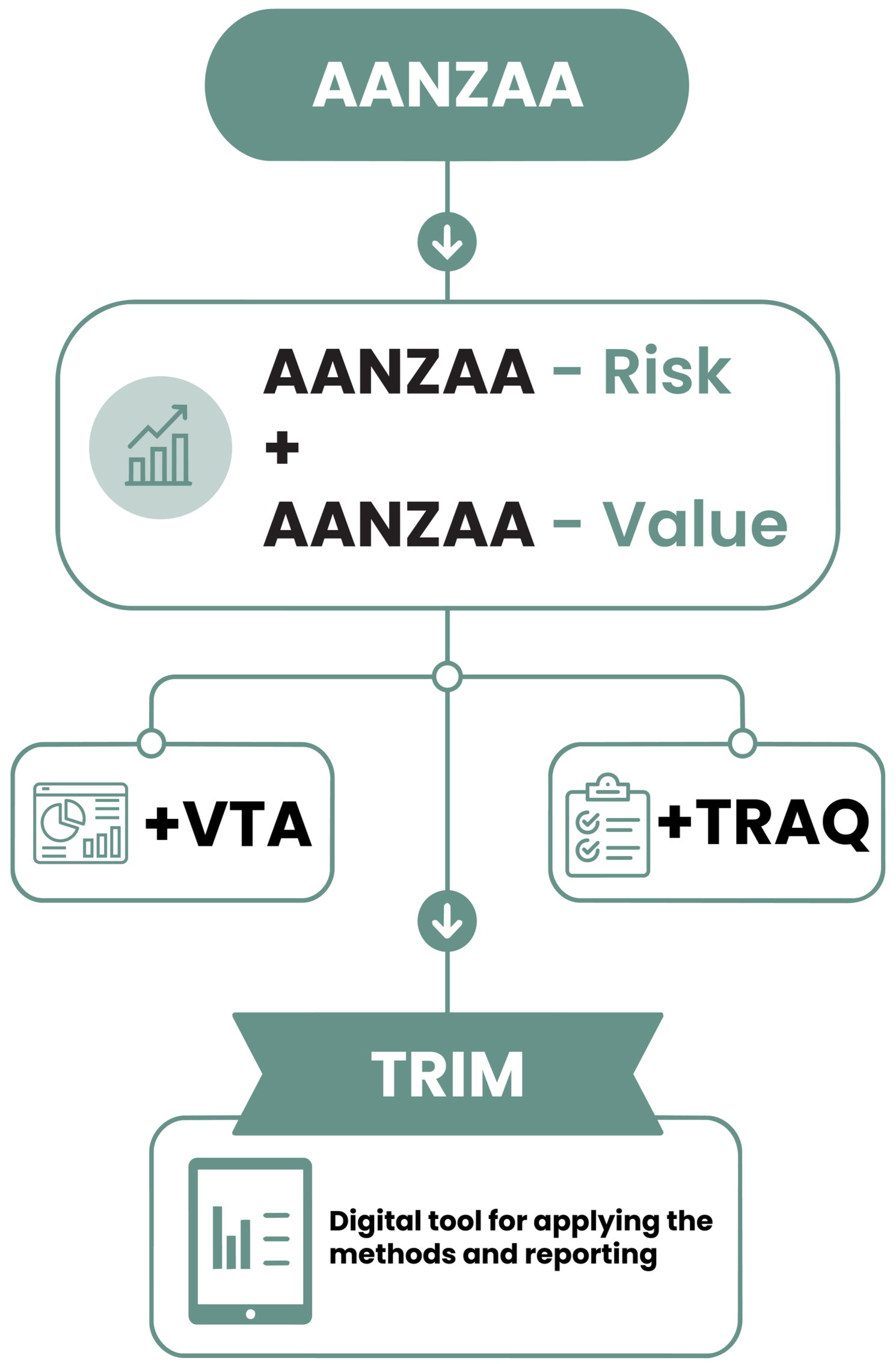
AANZAA The overall initiative developed by Arboriculture Australia and NZ Arboricultural Association.
AANZAA-Risk The method for assessing and communicating tree risk.
AANZAA-Value The method for assessing and communicating the socio-ecological (amenity) value of trees.
TRIMS The Tree Risk & Inventory Management System – the digital app that helps arborists apply the AANZAA methods, record assessment information and produce reports. It has a digital VTA and TRAQ capability also. Go to www.trimsfortrees.com. Available from your app store.
Put simply:
AANZAA provides the methods. TRIMS is the digital tool that helps you apply them.
AANZAA
AANZAA-Risk
What is AANZAA-Risk?
AANZAA-Risk is a structured method for assessing, comparing and communicating tree risk.
It is designed to support arborists in making consistent, evidence-based tree-management recommendations, while recognising that managing trees involves balancing risk with the benefits trees provide.
AANZAA-Risk can help practitioners:
• assess and compare tree risk
• record the factors contributing to an assessment
• communicate risk consistently
• support defensible tree-management recommendations
• consider risk alongside tree benefits
• communicate findings clearly to clients and decision-makers.
AANZAA-Risk was developed specifically in the context of Australian and New Zealand arboriculture.
Is AANZAA-Risk the same as TRAQ?
No.
AANZAA-Risk and ISA TRAQ are different tree risk assessment methods. AANZAA-Risk is a semi-quantitative method whilst TRAQ is a qualitative risk method.
Arboriculture Australia supports a range of tree risk assessment methods used by appropriately qualified arborists and recommends risk practitioners are trained in at least two risk assessment methods.
If you are already TRAQ or QTRA trained, your existing knowledge can also provide a pathway into shorter AANZAA training.
AANZAA-Value
What is AANZAA-Value?
AANZAA-Value provides a structured method for calculating the socio-ecological (amenity) value of trees.
It can be used for:
• individual trees
• groups and populations of trees
• existing tree populations
• future tree populations and forecasting.
The method considers factors including:
• the tree's market baseline value
• land use
• social value
• tree quality.
It can also work with existing tree inventories, canopy data and remote-sensing information to help assess and forecast the value of larger tree populations.
Why put a value on a tree?
Trees provide environmental, social and economic benefits that can be difficult to represent when management decisions are being made.
Expressing these benefits through a consistent valuation method can help inform:
• tree retention and removal decisions
• asset and urban forest management
• planning and development decisions
• investment in tree management
• budgeting and future canopy planning.
AANZAA-Value helps make the benefits and value of trees visible within the decision-making process.
How do AANZAA-Risk and AANZAA-Value work together?
AANZAA is designed to encourage balanced tree-management decisions.
Instead of asking only: "What is the risk?"
AANZAA can also help ask: "What is this tree worth and what benefits does it provide?"
Considering both sides can support more balanced, transparent and evidence-based decisions about retaining, managing or removing trees.
What is TRIMS?
TRIMS stands for Tree Risk & Inventory Management System.
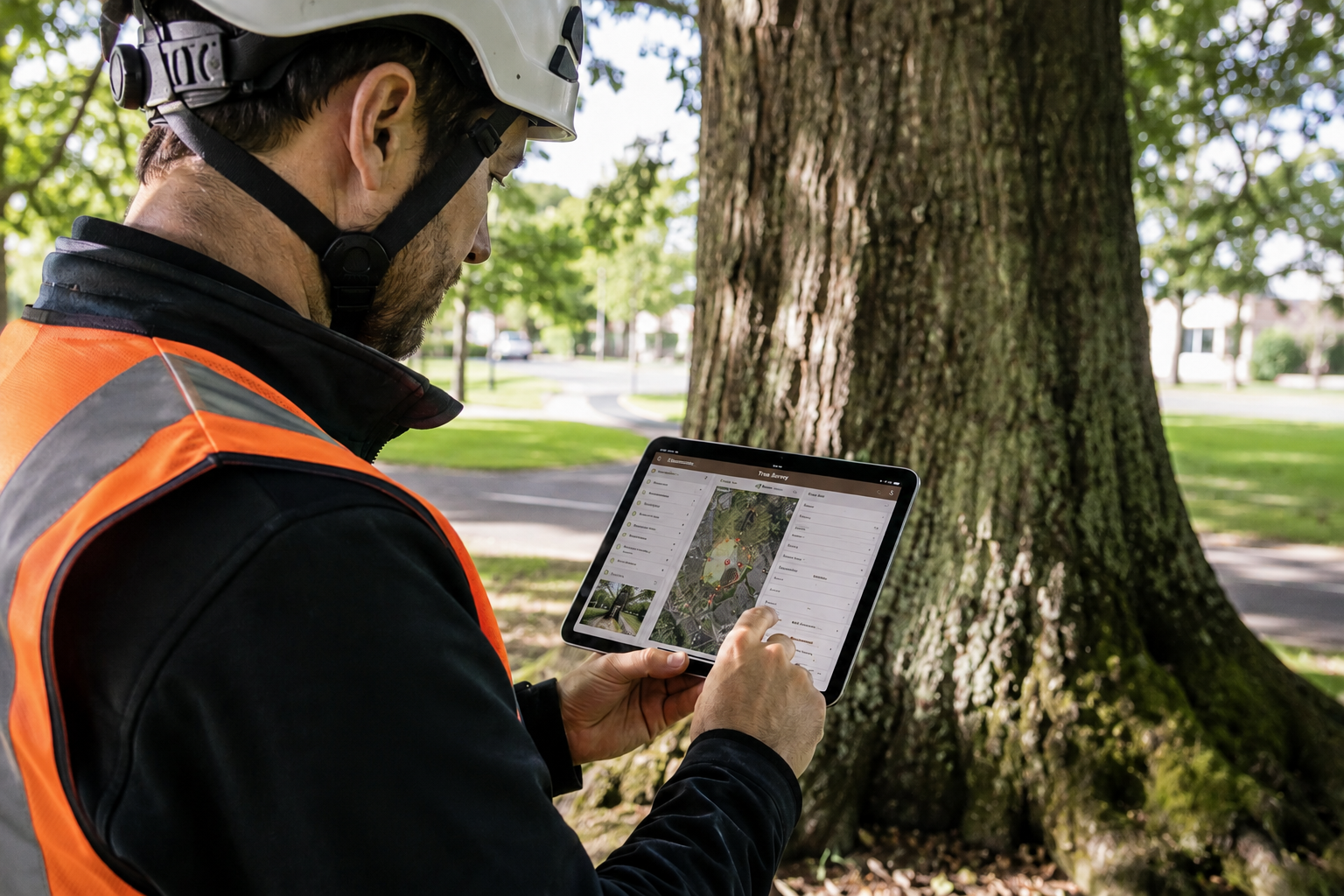
TRIMS is the digital app used to support the practical application of AANZAA-Risk and AANZAA-Value.
Depending on the assessment being undertaken, arborists can use TRIMS to:
• record assessment information in the field
• apply the AANZAA methodologies
• capture assessment results
• produce professional summary reports
• provide reports directly to clients.
Remember:
Learn the AANZAA methods → apply them in the field → record them in TRIMS → provide summary reports to your client directly from TRIMS.
Arb Aus members currently receive 15 TRIMS app credits/reports per month. NZ Arb members will too. Go to www.trimsfortrees.com for easy sign up. Available from your app store.
AANZAA Training
Which course is right for me?
AANZAA training is offered at different levels depending on your existing arboricultural qualifications and previous tree risk training.
-
Suitable for: Arborists with Diploma-level arboriculture qualifications, or Certificate III arborists who already hold TRAQ or QTRA.
You gain: AANZAA Tree Risk accreditation.
The course focuses on applying the AANZAA-Risk methodology rather than teaching general tree assessment skills.
-
Suitable for: Arborists with Diploma-level arboriculture qualifications, or Certificate III arborists who already hold TRAQ or QTRA.
You gain: AANZAA Tree Risk and AANZAA Tree Valuation accreditation.
The course covers both methods and how tree value can be considered alongside tree risk to support balanced management decisions.
-
Suitable for: Certificate III arborists who require additional arboricultural training before applying the AANZAA methodologies.
The course includes additional training in areas such as:
• tree health
• identifying tree risk factors
• tree assessment fundamentals
• further practical application of AANZAA-Risk and AANZAA-Value
• use of the TRIMS app.You gain: AANZAA Tree Risk and AANZAA Tree Valuation accreditation.
What do I get from AANZAA training?
Depending on the course you complete, you will gain:
• practical training in applying AANZAA-Risk and/or AANZAA-Value
• practical experience using TRIMS
• the ability to generate professional client summary reports
• eligible Continuing Education Units (CEUs)
• AANZAA accreditation
• access to supporting AANZAA resources
• access to TRIMS credits.
AANZAA-Risk accreditation is valid for seven years
Free AANZAA Resources
You don't need to attend a course to start learning about the AANZAA methodologies.
Arboriculture Australia provides a range of free training and practitioner resources, including:
AANZAA-Risk resources
• detailed methodology
• training presentations
• Excel training and assessment workbooks
• report templates.
AANZAA-Value resources
• detailed methodology
• training resources
• Excel tree valuation calculator.
Why has AANZAA been developed?
AANZAA has been developed to give the arboriculture industry a locally developed, practical and consistent approach to tree risk and tree valuation.
The aim is to support:
• consistent assessment – using well-structured process and methodologies
• evidence-based decisions – with assessment inputs and outputs clearly recorded
• balanced tree management – considering both risk and tree benefits
• better communication – providing clearer information to clients and decision-makers
• recognition of tree value – helping demonstrate the social and ecological benefits trees provide
• efficient reporting – supported by practical digital tools
• digital integration – an open-source method that’s free to integrate into Council and private systems
• education of arborists with free educational materials and a free tool in the TRIMS app
• Australian and New Zealand practice – methods developed collaboratively for our regional context
Still unsure where to start?
I want to learn about tree risk assessment→ Start with AANZAA-Risk
I want to calculate or communicate the value of trees→ Start with AANZAA-Value
I want to become trained in the AANZAA methods→ View AANZAA Training
I want to use the methods in the field and generate reports→ Learn about TRIMS
I want to see the methodology and free resources first→ Visit Training & Practitioner Resources